


The Most Needed Languages for Document Translation Service Needs in Toronto

Toronto runs on more than English. Immigration files, court records, university transcripts, corporate contracts, medical records, real estate papers, and personal certificates often arrive in languages spoken across every part of the city. When those documents need to be used for official purposes, a quick bilingual favor is not enough. They often need certified document translation services that meet the requirements of institutions such as IRCC, universities, banks, courts, and Ontario authorities.
That is why demand for translation in Toronto is shaped by both daily life and formal paperwork. The most requested languages are not only the most commonly spoken languages. They are also the languages tied to immigration, international business, education, family law, employment, and cross-border trade.
This guide looks at the most needed languages for translation in Toronto, the documents that often require certified translation, the role of IRCC, and why ATIO-certified translation matters for many official uses in Ontario.

Why translation demand in Toronto is different from many other cities
Toronto is one of the most multilingual cities in North America. People come to the region to study, work, reunite with family, build businesses, buy property, and settle permanently. Each of those steps can create a need for translated documents.
A birth certificate may be needed for an immigration application. A marriage certificate may be required for sponsorship. A degree may need translation for school admission or professional licensing. A contract may need translation before a company signs an agreement with a supplier, investor, distributor, or client.
In Toronto, translation is rarely only about words. It is also about acceptance. The translation may need to satisfy a government department, a court, a school, a professional regulator, or a private institution with strict document rules.
That is where professional translation becomes essential.
Common reasons people and companies request document translation services in Toronto include:
Canadian immigration and citizenship applications
IRCC document requests
Study permits, work permits, and visitor records
Permanent residence applications
Family sponsorship files
Court and legal proceedings
Academic admissions and credential assessments
Employment and HR records
Real estate and mortgage documents
Medical and insurance records
Business contracts and corporate filings
Import, export, and trade documentation
Some translations are simple and informational. Others need to be certified, accompanied by a translator declaration, or completed by a translator whose credentials are recognized by the receiving institution.
For Ontario, that often brings ATIO into the conversation.
The most needed languages for translation in Toronto
The most requested languages in Toronto reflect the city’s immigration patterns, business ties, and long-standing communities. Demand can shift over time, especially when immigration pathways, global events, or business activity change. Still, several languages remain consistently important for certified translation and business translation.
The table below gives a practical view of languages that are often needed for translation in Toronto and the types of documents commonly involved.
Language | Why demand is high in Toronto | Common documents for translation |
French | Canada’s official bilingual framework and federal documentation | Government records, school records, legal documents, corporate documents |
Spanish | Immigration, education, legal, and business ties with Latin America and Spain | Birth certificates, marriage certificates, diplomas, contracts, police certificates |
Mandarin Chinese | Immigration, education, investment, and business activity | Academic records, civil certificates, contracts, bank documents |
Cantonese Chinese | Long-standing community use and family documentation | Birth records, immigration documents, legal papers, personal certificates |
Arabic | Immigration, refugee claims, family sponsorship, legal and academic records | Civil status documents, IDs, court papers, school records |
Punjabi | Family sponsorship, immigration, education, and legal documents | Birth and marriage certificates, affidavits, school records, employment letters |
Hindi | Immigration, education, employment, and business records | Certificates, transcripts, police clearances, business documents |
Urdu | Immigration, family law, education, and government records | Civil documents, legal records, affidavits, academic documents |
Farsi | Immigration, credentials, legal matters, and business records | Civil certificates, university records, identity documents, court records |
Portuguese | Community ties, immigration, trade, and personal documentation | Certificates, contracts, school records, legal papers |
Italian | Long-standing community needs, estates, citizenship, and legal records | Birth records, marriage records, inheritance documents, old certificates |
Tamil | Immigration, education, legal, and family records | Civil documents, school records, affidavits, immigration papers |
Tagalog | Immigration, employment, family sponsorship, and education | Certificates, employment letters, school records, immigration forms |
Ukrainian | Immigration, temporary status, education, and legal documentation | Civil records, IDs, school records, legal and government documents |
Russian | Immigration, education, business, and legal documentation | Diplomas, certificates, contracts, court records |
Korean | Education, business, immigration, and civil documentation | School records, corporate papers, family certificates |
Vietnamese | Immigration, family records, and legal documents | Birth certificates, marriage certificates, school records, court papers |
This list is not exhaustive. Toronto also sees regular demand for translation in Polish, German, Greek, Romanian, Turkish, Bengali, Gujarati, Hebrew, Japanese, Somali, Amharic, Dari, Pashto, Serbian, Croatian, Bosnian, and many other languages.
The key point is that demand is tied to documents, not only conversation. A language may have a smaller speaker base but still be in high demand because people need official translations for immigration, licensing, litigation, inheritance, or education.
French translation remains essential in Canada
French has a special place in Canadian document translation. Since Canada is officially bilingual at the federal level, French-English translation is common for businesses, government-related documents, legal records, and national operations.
In Toronto, French translation is often needed for:
Federal forms and correspondence
Employment documents
Corporate documents used across Canada
Education records
Legal documents
Marketing and public-facing materials for national companies
For companies doing business in Toronto and across Canada, French translation is not just a courtesy. It can be part of legal compliance, customer service, employment standards, and national market access.
Spanish translation is one of the most requested language services
Spanish is a major language for certified translation in Toronto because of immigration, education, and business links with Latin America, Spain, and the United States. Spanish documents may come from Mexico, Colombia, Venezuela, Chile, Peru, Argentina, Cuba, the Dominican Republic, Spain, and many other countries.
Spanish translation often involves civil documents, including birth certificates, marriage certificates, divorce judgments, death certificates, police certificates, and adoption records. It is also common for academic records, contracts, powers of attorney, and immigration support letters.
One nuance with Spanish translation is that official document formats vary widely by country. A birth certificate from Mexico may look very different from one issued in Colombia or Spain. Local legal terms can also vary. A skilled translator understands that literal word-for-word translation is not always enough. The translated document must preserve the legal meaning and structure clearly.
Mandarin and Cantonese translation require more than “Chinese”
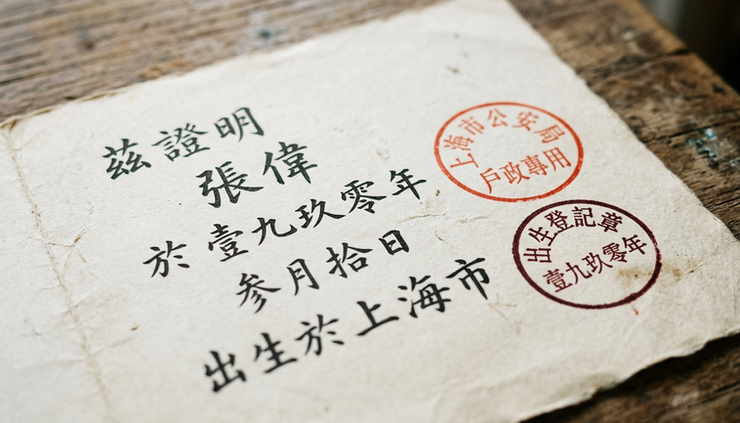
Many clients ask for “Chinese translation,” but that can mean different things. Mandarin and Cantonese are spoken varieties, while written Chinese can appear in simplified or traditional characters. Many official documents from mainland China use simplified Chinese. Documents from Hong Kong, Taiwan, or older family records may use traditional Chinese.
This matters for document translation services because the translator must identify the source format correctly and produce a translation that reflects the document accurately.
Common Chinese-English translation requests in Toronto include:
Birth certificates
Household registration documents
Marriage certificates
Academic transcripts
Diplomas
Business licenses
Court records
Bank and financial documents
Property records
Contracts and corporate documents
Name order is another important detail. Chinese names often place the family name first. For official English translation, consistency matters because the translated name must match passports, immigration forms, school applications, and legal files.
Languages tied closely to immigration and IRCC translation needs
IRCC, Immigration, Refugees and Citizenship Canada, handles applications for immigration, citizenship, permits, and related processes. Many people in Toronto need translation because IRCC may require documents that are not in English or French to be translated.
IRCC-related translation can involve personal history, family relationships, education, employment, identity, and legal status. Accuracy is critical because small mistakes can create delays, requests for clarification, or inconsistencies across an application.
For IRCC purposes, translated documents may include:
Birth certificates
Marriage certificates
Divorce certificates or judgments
Death certificates
Adoption records
Police clearance certificates
National identity documents
Passports and travel records in some cases
Education records
Employment letters
Military records
Court documents
Name change certificates
Custody documents
Financial records
Family registries
IRCC requirements can vary depending on the application type and where the translation was completed. Applicants should always check the current IRCC instructions for their situation. A professional translation provider can help prepare the translation properly, but the applicant remains responsible for submitting the correct documents.
The highest-demand IRCC languages in Toronto often include Arabic, Farsi, Spanish, Mandarin, Cantonese, Punjabi, Hindi, Urdu, Dari, Pashto, Ukrainian, Russian, Tamil, Tagalog, Portuguese, and Vietnamese.
Arabic translation has many regional differences
Arabic is one of the world’s major languages, but official documents may come from very different legal systems. A document from Egypt, Syria, Lebanon, Morocco, Iraq, Saudi Arabia, the United Arab Emirates, Jordan, or Sudan may have different terminology, stamps, formats, and civil registry practices.
For certified Arabic translation in Toronto, the translator needs to handle:
Formal Modern Standard Arabic
Country-specific legal terms
Names with several possible English spellings
Religious and civil marriage records
Court and family law language
Identification numbers and registry references
Arabic names can be especially sensitive in official translation. A person may have multiple given names, a father’s name, a family name, or a tribal name. The translation must match supporting documents as closely as possible to avoid confusion.
Farsi, Dari, and Pashto translation often involve identity and legal records
Farsi, Dari, and Pashto translation services are often needed for immigration, refugee claims, family documentation, academic evaluation, and legal matters. These languages can involve complex scripts, handwritten documents, and official seals.
Common documents include national identity cards, birth records, marriage documents, court records, police certificates, academic transcripts, military records, and affidavits.
A major nuance is transliteration. Names from Persian or Arabic-based scripts may appear in English in several ways. The translator must make careful choices and usually follow the spelling used in passports or existing Canadian documents when available.
Punjabi, Hindi, and Urdu translation are needed across immigration, education, and family files
Punjabi, Hindi, and Urdu are among the most active languages for document translation in Toronto because of family sponsorship, immigration applications, education, employment, and legal records.
Punjabi may appear in Gurmukhi or Shahmukhi script, depending on the source region. Hindi uses Devanagari script. Urdu uses a Perso-Arabic script. These differences are not minor. They affect the translator’s qualifications and document handling.
Documents often translated from Punjabi, Hindi, and Urdu include:
Birth certificates
Marriage certificates
School and university records
Police certificates
Affidavits
Property documents
Employment records
Court documents
Family registry documents
For immigration files, consistency across names, dates, and places matters. Many South Asian documents may use local calendars, different date formats, abbreviations, or regional place names. A professional translation should make those details clear without changing the meaning.
Ukrainian and Russian translation demand has grown for urgent documentation
Ukrainian and Russian translation can be needed for immigration, temporary residence, school enrollment, employment, medical records, legal documents, housing matters, and family documentation.
Many documents may include Cyrillic script, stamps, handwritten entries, and older Soviet-era terminology. Some family records may refer to places whose names have changed over time. A qualified translator must represent the original document accurately while making it understandable for Canadian institutions.
Business translation in Toronto follows trade, investment, and regulation
Toronto is a business center, and companies need translation for more than immigration paperwork. Businesses use translation to enter new markets, comply with regulations, work with suppliers, serve customers, manage cross-border teams, and reduce risk in legal or financial documents.
Document translation services for companies doing business in Toronto often include:
Contracts and agreements
Articles of incorporation
Shareholder resolutions
Financial statements
Tax records
Compliance documents
Employee handbooks
Safety materials
Technical manuals
Import and export documents
Product information
Insurance documents
Real estate transaction records
Court and arbitration documents
Business translation often has a different pressure point than personal translation. A birth certificate must be exact because it identifies one person. A contract must be exact because it controls rights, duties, deadlines, payment terms, liability, and dispute resolution.
A mistranslated clause can create real risk.
Portuguese, Italian, and Spanish matter for trade and family documentation
Portuguese, Italian, and Spanish remain important in Toronto for personal, legal, and business reasons. These languages are often needed for immigration, citizenship by descent, inheritance matters, property transactions, business contracts, and academic records.
Italian documents are often used in estate matters, dual citizenship applications, historical family records, and civil registry requests. Some older records may be handwritten, which requires extra care.
Portuguese translation may involve documents from Portugal, Brazil, Angola, Mozambique, and other Portuguese-speaking regions. Legal and administrative terms can vary by jurisdiction.
Spanish, as mentioned earlier, has wide regional variation. A contract from Spain may use different legal terms than a contract from Chile, Colombia, or Mexico. Good business translation accounts for not only language, but also legal and cultural context.
Korean, Japanese, German, and French translation support corporate and technical needs
Toronto companies often request Korean, Japanese, German, and French translation for operations, trade, product documentation, technical material, and corporate records.
These projects may include manuals, safety sheets, engineering documents, patents, supplier documents, business registration papers, and legal agreements. Technical translation requires subject familiarity, not only fluency.
For example, a product manual, medical device document, automotive component specification, or safety procedure must use clear terminology. The translation must read naturally, but it must also preserve exact meaning.

Certified translation, notarized translation, and ATIO in Ontario
Many people search for certified translation in Toronto when an institution asks for an official translation. The details matter because “certified,” “notarized,” and “ATIO-certified” do not always mean the same thing.
A certified translation is a translation completed with a statement or certification confirming that the translation is accurate and complete to the best of the translator’s knowledge. The format can vary depending on the translator and the institution receiving it.
A notarized translation usually means a notary public has witnessed the translator’s declaration or signature. The notary confirms the signing process, not the linguistic accuracy of the translation.
An ATIO-certified translator is a certified member of the Association of Translators and Interpreters of Ontario. ATIO is a recognized professional association in Ontario. When an Ontario institution asks for a certified translation, it may specifically accept or prefer translations completed by an ATIO-certified translator.
That distinction is important for official documents. Some receiving parties ask for translation by a certified translator. Some ask for notarization. Some have specific rules depending on the document type, where it was issued, and where it will be submitted.
Before ordering a translation, it helps to confirm:
Which institution will receive the document
Whether the translation must be certified
Whether notarization is required
Whether an ATIO-certified translator is requested
Whether the document must be translated from the original or a scan is accepted
Whether stamps, seals, handwritten text, and margins must be represented
Whether names must match passports or prior records
Whether a particular format is required
This can save time and reduce the risk of rejection.
Why ATIO certification matters for Toronto document translation
Toronto is in Ontario, so ATIO carries weight for many official translation needs in the province. ATIO-certified translators have professional recognition in specific language pairs. This can help when a translation is submitted to a court, government body, academic institution, professional regulator, or other official recipient.
For example, a person may need an English translation of a Spanish birth certificate, an Arabic marriage certificate, a Chinese divorce record, a Farsi court document, or a Ukrainian academic transcript. If the receiving institution asks for a certified translation, an ATIO-certified translator may be the right choice when available for that language pair.
Not every language pair has the same availability. Some major languages have more certified translators than rare languages. For less common languages, the requirements may differ, and additional declarations or notarization may be needed.
A professional document translation provider can explain the practical options without overpromising. The safest approach is always to match the translation format to the receiving institution’s stated requirements.
The hidden details that make translation accurate
People often think translation means replacing one word with another. Official document translation is more careful than that. The translator must preserve meaning, structure, and identity details while making the document readable in English or French.
Several details can affect whether a translated document is accepted.
Names must be consistent
Names are one of the most common sources of problems. A name may appear in several spellings across passports, birth certificates, marriage records, school documents, and immigration forms.
For example, the same Arabic, Farsi, Chinese, Ukrainian, or Hindi name may have more than one English spelling. A certified translator may follow the spelling on the passport when available, while also translating the original document accurately.
Dates and calendars must be clear
Many documents use different date formats. Some countries write day-month-year. Others use year-month-day. Some records use local calendars. If a date is ambiguous, the translator must handle it carefully and may need to include a note.
For immigration and legal purposes, dates are critical. A small date error can affect identity, eligibility, timelines, and document matching.
Stamps, seals, and handwritten notes matter
Official documents often include stamps, seals, signatures, marginal notes, registry numbers, and handwritten entries. These elements may seem secondary, but they can be part of the legal force of the document.
A professional translation should show the receiving institution what appears on the document. If text is illegible, the translator should not guess. Clear notation is better than invented wording.
Legal terms should not be flattened
Some legal terms do not have a perfect English equivalent. A family registry, civil status record, notarial act, court order, or police certificate may not match the Canadian system exactly.
Good translation avoids forcing a misleading equivalent. It uses clear language and, when needed, translator notes to explain terms without changing the document.
Formatting affects usability
A certified translation does not need to be a perfect visual copy, but it should be easy to compare with the source document. Tables, headings, stamps, line breaks, and official labels should be represented clearly.
This helps the officer, clerk, lawyer, registrar, or reviewer read the translation quickly and match it to the original.
How to choose document translation services in Toronto
The best translation provider for a Toronto document is not only the one who knows the language. The provider should understand the purpose of the document and the expectations of the receiving institution.
For personal documents, accuracy and acceptance matter most. For business documents, confidentiality, terminology, and turnaround time may also be key. For legal records, the translator must be precise and cautious. For IRCC files, consistency across documents can make a major difference.
When choosing a provider, look for:
Experience with certified document translation services
Knowledge of IRCC translation expectations
Access to ATIO-certified translators for major languages where available
Clear instructions about scans, originals, and legibility
Transparent handling of stamps, seals, and handwritten text
Careful name and date consistency
Confidential treatment of personal and business documents
Realistic turnaround times
Clear communication before the translation begins
A good provider will ask questions before translating if something is unclear. That is a sign of care, not a delay.
What to prepare before requesting a translation
To make the process smoother, gather the right information at the start.
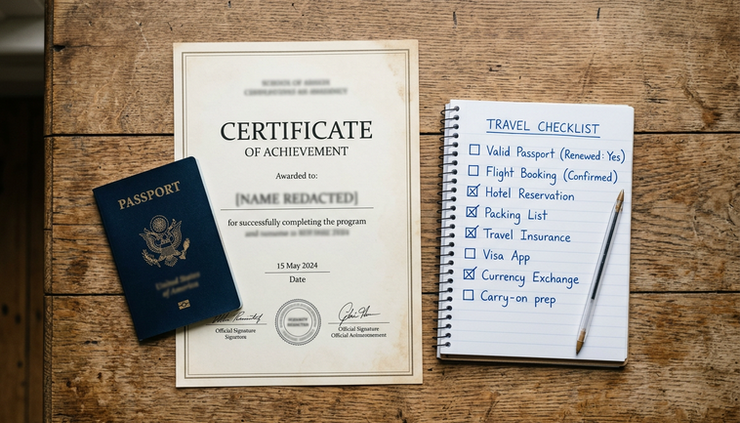
Send a clear scan or photo of the full document, including edges, seals, stamps, backs of pages, and any handwritten notes. If the document has multiple pages, keep them in order.
Also provide:
The language of the original document
The target language, usually English or French
The institution receiving the translation
Whether the translation is for IRCC, court, school, employment, business, or another purpose
Any deadline
Passport spelling of names, if relevant
Any previous translations of related documents
Any specific instructions from the receiving institution
For IRCC, applicants should review current instructions for their application category. For courts, schools, and regulators, it is best to confirm the exact requirements before ordering.
Silver Bay Translations supports Toronto’s most needed language pairs
Toronto’s language needs are broad, but the goal is always the same: a translation that is accurate, clear, and suitable for the purpose. Whether the document is for IRCC, a university, a court, an employer, a financial institution, or a business transaction, the translation should help the file move forward without confusion.
Silver Bay Translations provides document translation services for companies doing business in Toronto and for individuals who need certified translations for official use. For some of the major languages spoken in Toronto, Silver Bay Translations can assist with certified translations completed by qualified translators, including ATIO-certified translators where available and appropriate for the language pair.
This includes translation support for commonly requested languages such as Spanish, French, Mandarin, Cantonese, Arabic, Punjabi, Hindi, Urdu, Farsi, Portuguese, Italian, Tamil, Tagalog, Ukrainian, Russian, Korean, Vietnamese, and others.
The right translation is not only about language knowledge. It is about understanding the document, the institution, the deadline, and the standard of acceptance. In a city as multilingual as Toronto, that level of care makes all the difference.
Contact Silver Bay Translations for Your Document Translation Needs
Accurate translation involves more than just language proficiency. It requires comprehending the document, the institution, the deadline, and the acceptance criteria. In a multilingual city like Toronto, this attention to detail is crucial. If you need reliable and professional document translation services, look no further than Silver Bay Translations. Our team is dedicated to providing high-quality translations tailored to your specific needs.


