The Top 5 Languages in Minnesota for Document Translation Needs

Minnesota is home to families, students, workers, patients, business owners, and new arrivals who use more than one language every day. That shows up in a very practical place: paperwork.
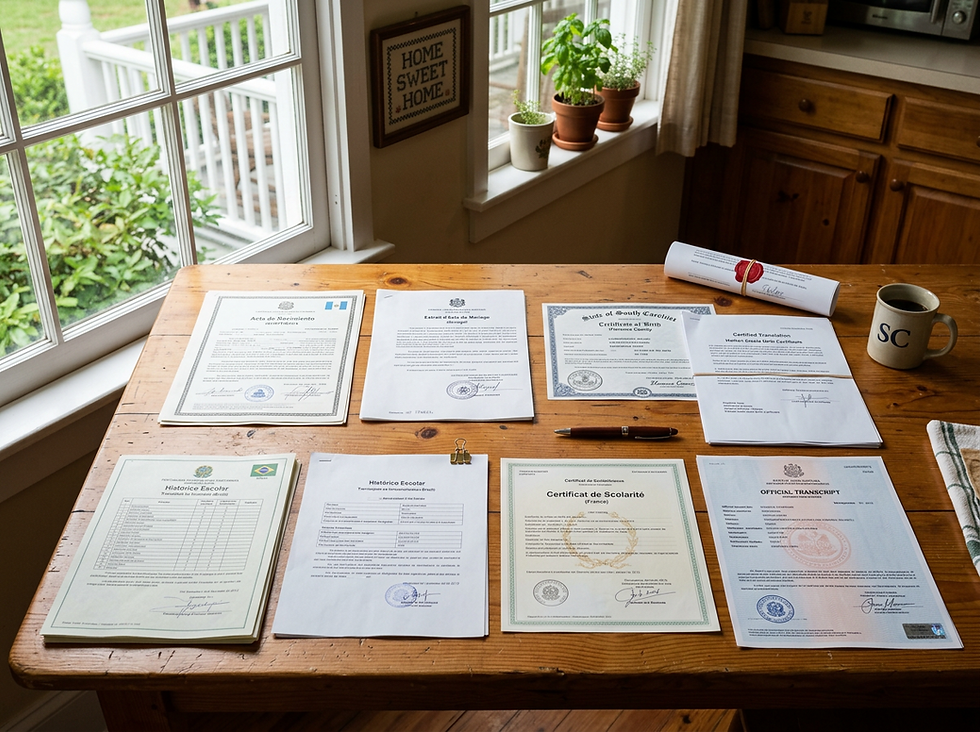
Birth certificates. Court forms. School transcripts. Immigration packets. Medical records. Lease agreements. Bank statements. If a document needs to be accepted by an agency, school, court, employer, or landlord, the translation has to be accurate, complete, and often certified.
That’s why document translation in Minnesota isn’t just about switching words from one language to another. It’s about making sure the translated document can actually be used for its intended purpose.

Minnesota’s most requested translation languages reflect its communities
The languages most often requested for translation in Minnesota tend to follow the state’s immigrant communities, refugee resettlement history, schools, health systems, and court needs. Exact demand can vary by city, agency, and document type, but five languages come up again and again.
Language | Common Minnesota translation needs | Where demand often shows up |
Spanish | Birth certificates, school records, medical records, legal documents, rental contracts | Twin Cities metro, southern Minnesota, central Minnesota |
Somali | Immigration documents, medical records, court documents, school records, benefits paperwork | Minneapolis, St. Paul, St. Cloud, Rochester, suburbs |
Hmong | Medical records, academic records, family documents, government forms | St. Paul, Minneapolis, Maplewood, Brooklyn Park |
Arabic | Immigration paperwork, academic records, legal documents, financial statements | Twin Cities metro, Rochester, college communities |
Vietnamese | Immigration documents, family records, academic records, business and financial documents | Twin Cities metro and surrounding suburbs |
These aren’t the only high-demand languages in the state. Minnesota also sees regular translation requests for Oromo, Amharic, Karen, Russian, Ukrainian, French, Lao, Korean, Chinese, Portuguese, and several Indigenous and African languages.
Still, Spanish, Somali, Hmong, Arabic, and Vietnamese are among the most common languages for official and personal document translation needs.
Spanish translation is needed across the state
Spanish is one of the most requested languages for translation in Minnesota. The need is not limited to Minneapolis or St. Paul. It also appears in agricultural communities, manufacturing towns, schools, clinics, and county offices.
Common Spanish document translation requests include:
Birth, marriage, and divorce certificates
School transcripts and diplomas
Medical records and immunization records
Court documents
Rental agreements
Bank statements and employment letters
For many families, Spanish translation helps connect documents from the United States, Mexico, Central America, South America, and the Caribbean with Minnesota agencies and institutions.
Somali translation has strong demand in Minnesota
Minnesota has one of the most visible Somali communities in the United States, especially in Minneapolis, St. Paul, and St. Cloud. Somali translation is often needed for immigration, health care, schools, family matters, and legal cases.
Somali documents may need extra care because names, spellings, and dates can appear differently across records. A skilled translator pays attention to consistency, especially when documents are used for immigration, court, or identity verification.
Hmong translation remains important for families and agencies
Minnesota has a long-established Hmong community, especially in St. Paul and nearby suburbs. Hmong translation is commonly requested for medical records, family documents, school paperwork, and government forms.
Hmong can involve different writing conventions and regional language considerations, so it helps to work with translators who understand both the language and the purpose of the document.
Arabic translation supports immigration, education, and legal needs
Arabic translation requests often involve immigration records, university documents, marriage certificates, court records, and financial paperwork. Since Arabic-speaking communities come from many countries, the source document may follow different formats depending on whether it comes from Iraq, Syria, Egypt, Sudan, Saudi Arabia, Lebanon, or another country.
For official use, the translation should preserve names, seals, stamps, dates, and document structure as clearly as possible.
Vietnamese translation often involves family and official records
Vietnamese translation is commonly needed for immigration documents, birth and marriage certificates, school records, financial records, and personal legal documents.
As with other official translations, details matter. A small difference in a name, date, or place of birth can slow down a review process, especially when the translation is part of an immigration or agency filing.
Minnesota cities with high translation demand
Translation needs are strongest in cities and regions where international communities, universities, hospitals, courts, and employers bring many languages together.
Minneapolis
Minneapolis has major demand for Somali, Spanish, Oromo, Arabic, Amharic, Hmong, and many other languages. Translation requests often involve immigration documents, housing paperwork, school forms, medical records, and court filings.
Because Minneapolis serves as a major center for county services, legal matters, health care, and community organizations, certified translations are often needed for official review.
St. Paul
St. Paul has large Hmong, Karen, Somali, Latino, and other immigrant communities. Translation requests often include academic records, family documents, health records, court papers, and public agency forms.
Ramsey County services, schools, hospitals, and legal offices frequently create a need for clear and complete document translation.
Bloomington, Brooklyn Park, Burnsville, and other Twin Cities suburbs
Many Twin Cities suburbs have growing multilingual populations. Brooklyn Park, Bloomington, Burnsville, Eagan, Maplewood, Richfield, Eden Prairie, and Woodbury often see translation needs tied to housing, schools, employment, immigration, and medical care.
Suburban translation work can be just as official as work in the central cities. A lease, school record, or agency letter may still need certification, notarization, or both.
Rochester
Rochester attracts international patients, medical professionals, students, and families. Medical records, academic records, immigration documents, and financial paperwork are common translation needs.
Medical translation has to be handled carefully. It may involve diagnoses, treatment histories, lab reports, prescriptions, vaccination records, or insurance documents. This content is informational only and should not replace advice from a medical, legal, or financial professional.
St. Cloud, Worthington, Willmar, Mankato, and Moorhead
Translation demand is also strong outside the Twin Cities. St. Cloud has a notable Somali community. Worthington and Willmar have diverse workforces tied to agriculture and food production. Mankato and Moorhead serve student populations, families, and cross-border or regional business needs.
These cities often need translations for immigration, employment, housing, school enrollment, public benefits, and court matters.
The main types of document translation services in Minnesota
Different documents need different handling. A casual translation may work if someone only wants to understand a letter from a relative. Official paperwork is different. It usually needs a formal translation prepared for a specific authority.
Here are the most common categories of Document Translation Services in Minnesota.
Personal and vital records
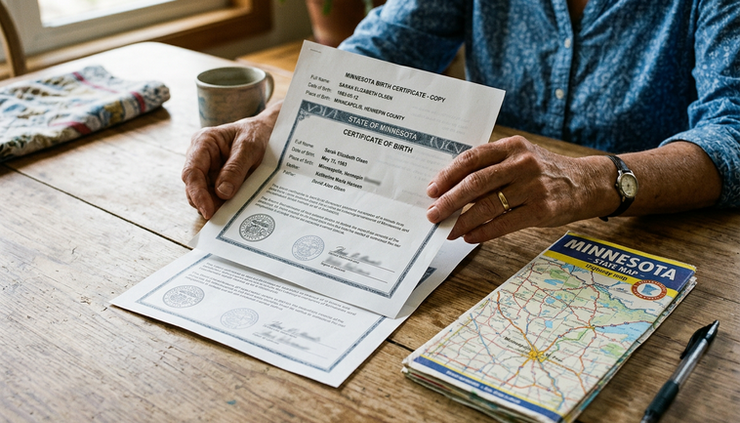
Vital records are some of the most frequently translated documents. They often support immigration, marriage, school enrollment, benefits, identity verification, and family law matters.
Common examples include:
Birth certificates
Marriage certificates
Divorce decrees
Death certificates
Adoption records
Name change documents
Passports and national IDs
These documents must be translated completely, including stamps, seals, handwritten notes, signatures, and marginal notes when visible.
Immigration translations
Immigration translation is one of the biggest areas of demand. U.S. immigration filings often require full English translations of foreign-language documents, along with a certification that the translation is accurate and complete.
Common immigration documents include:
Birth and marriage certificates
Divorce certificates
Police clearance letters
Passports and identity documents
School records
Employment letters
Financial records
Affidavits and personal statements
For immigration use, accuracy matters, but formatting also matters. Names, dates, places, and official titles should be easy for the reviewer to compare with the source document.
Court and legal translations
Courts may require translated documents for civil, family, criminal, immigration-related, housing, probate, or small claims matters.
Common legal documents include:
Court orders
Complaints and petitions
Evidence exhibits
Affidavits
Contracts
Custody paperwork
Protective orders
Rental disputes and lease records
Legal translation calls for precise language. A translator should not “fix” or rewrite the document. The job is to carry the meaning into English, or from English into another language, without adding interpretation.
Academic translations
Students, graduates, and professionals often need academic translation for schools, employers, licensing boards, and evaluation agencies.
Common academic records include:
Transcripts
Diplomas
Degree certificates
Course descriptions
Letters of enrollment
Training certificates
Professional licenses
Academic translators should preserve grades, dates, institutional names, course titles, and any notes about credits or class hours. If the document will be submitted for credential evaluation, the translation may need to follow that evaluator’s rules.

Medical translations
Medical records are often translated for treatment, insurance, immigration medical exams, legal cases, or care coordination.
Common medical documents include:
Vaccination records
Lab results
Discharge summaries
Diagnosis letters
Medication lists
Surgical reports
Mental health records
Insurance documents
Medical translation requires careful handling because terms can be technical and sensitive. Privacy also matters. Documents should be treated with care from receipt to delivery.
Financial and business translations
Financial records may be needed for immigration, loans, taxes, job applications, business filings, or court matters.
Common financial documents include:
Bank statements
Tax records
Pay stubs
Employment verification letters
Business registration documents
Invoices
Loan documents
Insurance records
Numbers, currencies, dates, names, and account references must be handled with special care. Even small errors can create confusion.
Housing and rental document translations
Rental contracts and housing documents are a frequent need in Minnesota, especially for tenants, landlords, housing agencies, and legal aid matters.
Common housing documents include:
Lease agreements
Rental contracts
Eviction notices
Housing applications
Utility letters
Income verification documents
Tenant notices
A translated rental agreement can help all parties understand obligations, deadlines, deposits, repair terms, and payment responsibilities.
Certified and notarized translations are not the same thing
This is where a lot of people get tripped up. Certified translation and notarized translation sound similar, but they serve different purposes.
Certified translation
A certified translation includes a signed statement from the translator or translation company confirming that the translation is complete and accurate to the best of their ability.
Certified translations are often requested by:
Local government offices
Minnesota state agencies
Federal agencies
USCIS and other immigration authorities
Courts
Schools and universities
Licensing boards
Employers
Medical and insurance providers
The certification usually includes the translator’s or company’s name, signature, contact information, and a statement of accuracy.
Notarized translation
A notarized translation includes a notary acknowledgment. The notary verifies the identity of the person signing the certification. The notary does not usually verify the accuracy of the translation.
Notarized translations may be requested for certain court filings, international submissions, academic matters, or agency requirements. Rules can vary, so it’s smart to check with the receiving office before ordering.
Which one do agencies usually need
Many official uses require certified translation. Some require notarization too. A few may require extra steps, such as an apostille, depending on where the document will be used.
If a document is going to a Minnesota court, county office, federal agency, school, hospital, or immigration authority, ask the receiving party what they require. The safest translation process starts with the end use.
How to prepare documents for translation
A smooth translation starts with a clear document and good instructions. This saves time and helps prevent questions later.
Before sending documents for translation, try to provide:
Clear scans or photos
All pages, including backs if stamps or notes appear there
The target language
The country or agency receiving the translation
Any spelling preferences for names
Deadlines
Whether certification or notarization is needed
If a document has handwriting, faded stamps, seals, or cut-off text, mention that upfront. A translator may mark unclear parts as illegible rather than guess. That’s a good thing. Official translations should be honest about what can and can’t be read.
For names, consistency is key. If a passport spells a name one way and a birth certificate transliterates it another way, share the preferred spelling and any supporting documents. This helps the translation match the rest of the file.

Silver Bay Translations helps with Minnesota document translation needs
Minnesota’s language needs are broad, and the paperwork can feel stressful when an agency, court, school, or immigration office is waiting on the right translation. The good news is that the process becomes much easier when the translation is handled by people who understand official documents.
Silver Bay Translations provides document translation services for individuals, families, students, law firms, medical offices, schools, agencies, and businesses. Services include certified translations, notarized translations when needed, and translations for immigration, court, academic, medical, financial, and rental documents.
Whether the language is Spanish, Somali, Hmong, Arabic, Vietnamese, or another language commonly used in Minnesota, the goal is the same: accurate, complete translations that are ready for real-world use.
If you need a document translated for official use in Minnesota, contact Silver Bay Translations today. We’ll help you figure out what type of translation you need, prepare it correctly, and get your documents ready for submission.