


The Most Requested Languages for Translation in New York City for Document Services

New York City runs on language. Walk a few blocks in Queens, Brooklyn, Manhattan, the Bronx, or Staten Island and you may hear Spanish, Chinese, Russian, Arabic, Bengali, French, Korean, Haitian Creole, Polish, Ukrainian, Hebrew, and dozens of other languages in a single afternoon.
That is why document translation services in New York City are not a niche need. They are part of daily life for families, law firms, medical offices, schools, real estate professionals, nonprofits, government agencies, and businesses that serve multilingual communities.
The demand is especially strong for official paperwork. Birth certificates, marriage certificates, divorce decrees, school transcripts, diplomas, immigration records, financial documents, medical records, contracts, court documents, and business filings often need to be translated accurately, clearly, and in the right format.
This guide explains the most requested translation languages in New York City, why demand is so high, which documents commonly require translation, and how to choose a qualified provider for certified document translation.

Why translation demand is so high in New York City
New York City is one of the most linguistically diverse places in the United States. Its language needs come from immigration, international business, tourism, education, health care, law, and government services.
Many people in New York use English every day while also relying on another language at home, in legal matters, or when handling official records from another country. That creates a steady need for precise translation, especially when a document will be submitted to an agency, school, court, attorney, employer, or financial institution.
Some translation needs are personal. A family may need a birth certificate translated for an immigration filing. A student may need academic records translated to apply to a university. A couple may need a marriage certificate translated after marrying abroad.
Other translation needs are professional. A law firm may need affidavits, contracts, or evidence translated. A medical provider may need patient records translated. A company may need employee documents, business agreements, or financial statements translated for review.
The most requested languages often reflect the communities that live and work across the five boroughs. They also reflect the countries connected to New York through trade, immigration, education, and family ties.
Translation demand in New York is not only about speaking another language. It is about making written records usable, official, and accurate in English or another required language.
The most requested translation languages in New York City
The languages below are among the most commonly requested for translation in New York City. Demand can shift by neighborhood, industry, immigration patterns, school admissions, legal filings, and international business activity, but these languages consistently appear in high-volume document translation work.
Spanish translation is the most common request
Spanish is one of the highest-demand languages for translation in New York City. It is used across all five boroughs and connects many communities with roots in Puerto Rico, the Dominican Republic, Mexico, Colombia, Ecuador, Peru, Cuba, Honduras, El Salvador, Guatemala, Venezuela, and other Spanish-speaking regions.
Spanish document translation is often needed for:
Birth certificates
Marriage certificates
Divorce records
Immigration documents
School transcripts
Diplomas
Medical records
Police records
Court documents
Business contracts
Financial statements
For official submissions, Spanish to English translation must be clear and complete. Names, dates, seals, stamps, handwritten notes, and marginal text can all matter. A small omission may create delays when a document is reviewed by an agency, school, attorney, or court.
English to Spanish translation is also heavily requested in New York. Businesses, health care providers, landlords, schools, and community organizations often need Spanish versions of forms, letters, notices, agreements, and informational materials.
Chinese translation is essential across many document types
Chinese is another major translation language in New York City. Demand includes both Simplified Chinese and Traditional Chinese, along with spoken-language considerations such as Mandarin, Cantonese, and other Chinese varieties.
For written document translation, the key distinction is often whether the document uses Simplified or Traditional Chinese characters. Mainland China typically uses Simplified Chinese, while Traditional Chinese is commonly used in places such as Taiwan, Hong Kong, and many overseas communities.
Chinese translation requests in New York often include:
Civil records
Immigration records
Business registration documents
Bank statements
Academic transcripts
Diplomas
Medical records
Legal documents
Real estate documents
Adoption paperwork
Chinese document translation requires close attention to names and place names. Transliteration can vary, and official documents may use different formats depending on where they were issued. A good translator preserves the meaning while keeping the document consistent and readable for the receiving institution.
Russian translation remains in steady demand
Russian translation has long been requested in New York City, especially for immigration, legal, medical, and academic documents. New York has many Russian-speaking residents from Russia, Ukraine, Belarus, Uzbekistan, Kazakhstan, Georgia, Moldova, and other parts of Eastern Europe and Central Asia.
Russian to English translation is commonly needed for:
Passports and identity records
Birth certificates
Marriage and divorce certificates
Court decisions
School records
Employment records
Medical records
Property documents
Military records
Immigration files
One reason Russian translation can be complex is that many documents use Cyrillic script. Names may be transliterated into English in more than one way. For example, the same name may appear slightly differently on a passport, school record, and older civil document. A careful translator keeps the translation consistent with the official record whenever possible.
Arabic translation is important for legal, immigration, and business documents
Arabic translation is frequently requested in New York for documents from the Middle East and North Africa, as well as for international business and legal matters. Arabic-speaking communities in New York include people with backgrounds connected to Egypt, Yemen, Syria, Lebanon, Jordan, Morocco, Algeria, Palestine, Iraq, Sudan, Saudi Arabia, and other countries.
Common Arabic translation requests include:
Birth and marriage certificates
Divorce judgments
Religious marriage records
Passports and identity documents
Immigration materials
Academic records
Legal filings
Contracts
Business documents
Medical records
Arabic presents several translation issues that require skill. It is written from right to left. Some official documents include seals, signatures, older terminology, or regional wording. Names may have several acceptable English spellings. A quality Arabic translation should be faithful to the source document and easy for an English-speaking reviewer to follow.
Bengali translation is highly requested in New York City
Bengali is one of New York City’s most important community languages. It is especially relevant for families and businesses connected to Bangladesh and Bengali-speaking regions of India.
Bengali translation is often needed for:
Birth certificates
Marriage certificates
National identity documents
Immigration documents
School records
Medical records
Legal statements
Family records
Affidavits
Community organization materials
Accurate Bengali translation matters because many official records contain names, dates, locations, and family relationships that must be translated exactly. Civil documents may also include stamps or handwritten notes. Certified Bengali translation is often requested when documents are being submitted to immigration authorities, schools, or legal offices.
French translation supports immigration, education, and international work
French translation is commonly requested in New York City for documents from France, Canada, Haiti, West Africa, Central Africa, and other French-speaking regions.
French to English translation is often needed for:
Academic transcripts
Diplomas
Birth certificates
Marriage records
Immigration documents
Business contracts
Legal documents
Medical records
Professional licenses
French documents can vary by country. A school transcript from France may look very different from one issued in Senegal, Haiti, or Quebec. Legal wording may also differ. Professional French translation should account for the source country and the purpose of the translation.
English to French translation is also common for business, education, tourism, and nonprofit communication.
Haitian Creole translation serves a large New York community
Haitian Creole is an important translation language in New York, especially for personal, immigration, medical, legal, and community documents. Haitian Creole is distinct from French, even though the two languages share some vocabulary. A French translator is not automatically qualified to translate Haitian Creole documents.
Haitian Creole translation may be required for:
Personal statements
Medical instructions
School communications
Immigration support documents
Legal notices
Community outreach materials
Family records
Forms and letters
For service providers, translating into Haitian Creole can make information more accessible. For individuals, translating from Haitian Creole into English can help support official filings and personal documentation.
Korean translation is common for academic, legal, and business records
Korean translation demand in New York is strong for personal records, academic documents, immigration filings, and business materials. Korean-speaking communities and businesses across New York often need both Korean to English and English to Korean translation.
Common Korean document translation requests include:
Family registry documents
Birth certificates
Marriage certificates
Academic transcripts
Diplomas
Employment documents
Business agreements
Financial documents
Immigration paperwork
Legal records
Korean documents may include formal family relationship records that do not always match U.S. document categories exactly. Translators must make the meaning clear without adding information that does not appear in the source.
Italian translation remains relevant in New York
Italian translation has a long history in New York City. While demand has changed over time, Italian remains a commonly requested language for legal records, family history documents, citizenship matters, academic records, and business material.
Italian translation requests often include:
Birth certificates
Marriage certificates
Death certificates
Naturalization records
Church records
Academic records
Contracts
Real estate records
Inheritance documents
Italian to English translation is often requested for documents issued in Italy. English to Italian translation may be needed for dual citizenship applications, legal matters, or records submitted to Italian institutions.
Polish translation is often needed for civil and legal paperwork
Polish translation is common in New York because of long-standing Polish-speaking communities and ongoing family, legal, and business ties with Poland.
Polish translation may be needed for:
Birth and marriage certificates
Divorce decrees
Court records
School transcripts
Diplomas
Employment letters
Immigration records
Legal documents
Business documents
Polish uses diacritical marks that affect spelling and meaning. Names and place names should be handled carefully, especially in certified translation. Older documents may also use formats or terminology that require experience to translate clearly.
Urdu, Hindi, and Punjabi translation support South Asian communities
Urdu, Hindi, and Punjabi are frequently requested in New York City for personal records, immigration filings, academic documents, medical records, and legal materials. These languages serve communities connected to Pakistan, India, and the wider South Asian diaspora.
Common documents include:
Birth certificates
Marriage certificates
Identity documents
School records
Religious marriage records
Affidavits
Medical records
Immigration forms and supporting documents
Business documents
These languages require attention to script, regional wording, and document format. Urdu commonly uses Perso-Arabic script, Hindi uses Devanagari, and Punjabi may appear in Gurmukhi or Shahmukhi depending on the source.
Portuguese translation is requested for Brazil, Portugal, and beyond
Portuguese translation demand in New York often comes from families, students, businesses, and legal matters connected to Brazil and Portugal, as well as Portuguese-speaking countries in Africa.
Portuguese document translation may include:
Birth certificates
Marriage certificates
Academic records
Immigration documents
Business contracts
Financial records
Medical records
Legal documents
Brazilian Portuguese and European Portuguese differ in vocabulary and phrasing. For official translation, the translator should understand the source country and preserve the meaning of the original document.
Hebrew and Yiddish translation serve legal, religious, and community needs
Hebrew translation is often required for documents from Israel, including civil records, educational documents, business records, legal documents, and personal documents. Yiddish translation may be needed for community records, religious documents, historical papers, letters, and certain legal or family materials.
Common requests include:
Birth certificates
Marriage records
Divorce documents
Religious records
Academic records
Legal documents
Family history documents
Immigration-related paperwork
Hebrew is written from right to left, and transliteration can vary. Yiddish translation may require specialized knowledge, especially for older records or handwritten materials.
Ukrainian translation has grown in importance
Ukrainian translation is increasingly requested in New York for immigration, legal, academic, medical, and civil documents. Many records use Cyrillic script, and some documents may include Ukrainian, Russian, or both, depending on when and where they were issued.
Ukrainian translation requests may include:
Birth certificates
Marriage certificates
Passports and identity documents
School records
Medical records
Employment records
Legal records
Immigration documents
Certified Ukrainian translation is often needed when documents are submitted to U.S. agencies, schools, legal offices, or other institutions.
Which documents most often need translation in New York City
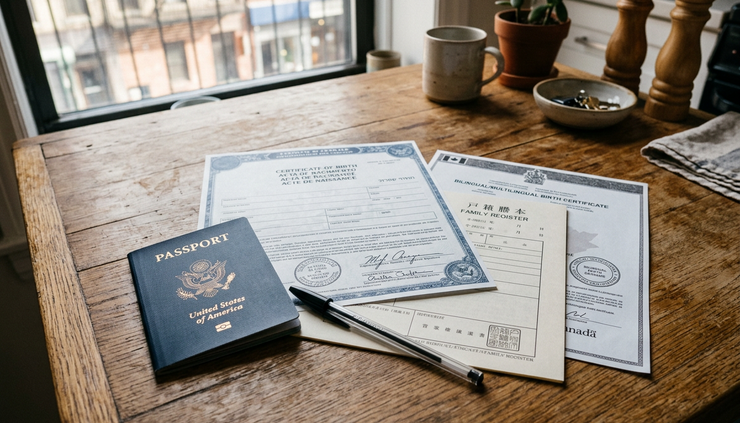
Language demand matters, but the type of document matters just as much. A casual translation may be enough for personal understanding, but many institutions require a complete and accurate certified translation.
A certified translation usually includes a signed statement from the translator or translation company confirming that the translation is complete and accurate to the best of their ability. Requirements can vary by receiving institution, so it is wise to confirm what format is needed before ordering.
Personal and family documents
Personal records are among the most common translation requests in New York City. These documents often support immigration, school enrollment, marriage, divorce, benefits, insurance, employment, or legal matters.
Common personal documents include:
Birth certificates
Marriage certificates
Divorce decrees
Death certificates
Adoption records
Name change documents
Passports and identity cards
Driver’s licenses
Family registry documents
Religious certificates
These documents must be translated with care because they contain key identity details. A misspelled name, incorrect date format, or missing stamp description can lead to questions from the receiving agency.
Immigration documents
New York has a large number of immigration-related translation needs. U.S. immigration filings often require documents in foreign languages to be submitted with a complete English translation.
Common immigration translation requests include:
Birth certificates
Marriage certificates
Divorce records
Police clearance letters
Identity documents
Military records
School records
Employment letters
Financial records
Affidavits and personal statements
For immigration purposes, translations should be complete. That means visible seals, stamps, handwritten notes, signatures, letterheads, and amendments should be included or described when relevant.
Academic documents
Students, graduates, and professionals often need academic records translated for school admissions, credential evaluation, licensing, employment, or visa-related matters.
Common academic documents include:
Transcripts
Diplomas
Degree certificates
Course descriptions
Letters of enrollment
Recommendation letters
Training certificates
Professional licenses
Academic translation can be detailed. Course titles, grading systems, academic years, institutional names, and honors should be handled consistently. In some cases, a credential evaluation company may also require a specific format.
Legal and court documents
Legal translation requires accuracy, structure, and attention to terminology. Law firms, courts, individuals, and businesses may request translation for documents connected to civil cases, family law, contracts, estate matters, immigration, and international disputes.
Common legal documents include:
Court orders
Affidavits
Contracts
Powers of attorney
Divorce judgments
Custody documents
Property records
Wills and estate documents
Police reports
Evidence documents
Legal translation should not “clean up” or rewrite the original. It should reflect what the source document says, including unclear wording or unusual formatting when needed.
Medical documents
Medical translation is often needed when patients move, seek treatment, apply for benefits, support legal claims, or need records reviewed by another provider.
Common medical documents include:
Medical records
Lab results
Vaccination records
Hospital discharge papers
Prescriptions
Psychological evaluations
Insurance records
Doctor letters
Medical language must be translated carefully. Abbreviations, medication names, dates, measurements, and diagnoses can affect how the document is understood.
Business and financial documents
New York businesses often work across languages, especially when serving international clients, hiring multilingual staff, expanding into new markets, or handling foreign records.
Common business and financial documents include:
Contracts
Articles of incorporation
Business licenses
Tax records
Bank statements
Lease agreements
Employee handbooks
HR forms
Invoices
Marketing materials
Product documents
Business translation may be used for internal review, client communication, regulatory submissions, or legal purposes. The right tone and terminology depend on the document’s purpose.
How to choose the right translation service in New York City
The best translation provider is not just bilingual. Professional document translation requires language skill, subject knowledge, formatting judgment, and an understanding of official submission needs.
A strong translation company should be able to explain the process clearly and ask the right questions before starting.
Look for experience with certified translation
If the document will be submitted to an agency, school, court, attorney, employer, or official reviewer, ask whether certified translation is available.
Certified translation is commonly requested for:
Immigration filings
Academic applications
Legal submissions
Court-related matters
Government records
Licensing applications
Civil documents
A certified translation should be complete, accurate, and accompanied by a certification statement when required.
Confirm the language variant
Some languages have regional or written-form differences. Choosing the right variant helps avoid confusion.
Examples include:
Language need | Detail to confirm |
Chinese | Simplified or Traditional Chinese |
Portuguese | Brazilian or European Portuguese |
French | France, Canada, Haiti, or African French context |
Spanish | Country of origin when terminology matters |
Punjabi | Gurmukhi or Shahmukhi script |
Arabic | Source country when legal terms vary |
English | U.S. English format for local submissions |
This step matters because the same language can appear differently across countries and institutions.
Ask how names, stamps, and formatting are handled
Official documents often contain details beyond the main text. These details can include seals, stamps, signatures, handwritten notes, crossed-out text, marginal comments, registration numbers, and official letterheads.
A professional translator should handle these elements clearly. For example, a seal may be described as `[seal]` if it is visible but not fully readable. A stamp may be translated if the text is clear. If part of the document is illegible, the translation should say so rather than guess.
Share the purpose of the translation
A translation for personal reading may not need the same format as a translation for immigration, court, school, or licensing. The provider should know where the translation will be submitted.
Useful details include:
The target language
The source language
The country where the document was issued
The receiving agency or institution
Whether certification is required
Whether notarization is requested
The deadline
Whether formatting must match the original
This information helps the translation team prepare the document correctly the first time.
Avoid choosing based on speed alone
Fast turnaround is helpful, especially when a deadline is close. Still, speed should not come at the cost of accuracy. Official document translation often requires review, formatting, and careful handling of names and numbers.
A reliable provider will give a realistic timeline based on the language, document length, document quality, and complexity.
Why accurate translation matters for official documents
Poor translation can create real problems. A small error may delay an application, confuse a reviewer, or require a corrected version.
Common issues in weak translations include:
Names spelled inconsistently
Dates converted incorrectly
Missing seals or stamps
Handwritten notes ignored
Legal terms translated too loosely
Academic grades misunderstood
Medical abbreviations translated incorrectly
Formatting that makes the document hard to review
Country-specific terms treated as generic wording
Accuracy matters because official documents carry legal, personal, and financial meaning. A birth certificate proves identity and parentage. A transcript shows academic history. A court order may affect legal rights. A contract may define business obligations.
Good translation protects the meaning of the original document. It also helps the person reviewing it understand the document without needing to know the source language.
A strong document translation is complete, readable, and faithful to the original. It should help the reviewer trust the record, not question it.
For New York City document translation, local language diversity adds another layer. A translation provider may handle Spanish certificates one day, Chinese business records the next, then Arabic legal documents, Russian school records, and Bengali immigration paperwork. That range requires organized processes and qualified linguists.
Contact Silver Bay Translations for document translation services in New York City
Silver Bay Translations provides professional document translation services for individuals, families, law firms, schools, businesses, and organizations that need accurate language support in New York City.
Whether the document is in Spanish, Chinese, Russian, Arabic, Bengali, French, Haitian Creole, Korean, Italian, Polish, Ukrainian, Portuguese, Hebrew, Urdu, Hindi, Punjabi, or another language, the goal is the same: a clear and accurate translation that fits the purpose of the document.
Silver Bay Translations can help with:
Certified translation of personal documents
Immigration document translation
Legal document translation
Academic transcript and diploma translation
Medical record translation
Business and financial document translation
Multilingual document support for New York City clients
If you need a document translated for an agency, attorney, school, employer, court, or personal matter, send the file for review and confirm the required language, deadline, and submission format.
For professional help, contact Silver Bay Translations for document translation services in New York City.

Frequently asked questions about translation languages in New York City
What are the most requested translation languages in New York City?
The most requested languages often include Spanish, Chinese, Russian, Arabic, Bengali, French, Haitian Creole, Korean, Italian, Polish, Portuguese, Hebrew, Ukrainian, Urdu, Hindi, and Punjabi. Demand depends on the document type, community needs, immigration patterns, and business activity.
Do I need a certified translation for immigration documents?
Many immigration filings require a complete English translation if the original document is in another language. A certification statement is often needed. Always check the latest requirements for the specific filing or ask the professional handling the case.
Can one translator handle every language?
No. Professional translation requires native-level language skill and subject knowledge. A qualified provider matches each document with a translator who understands the source language, target language, and document type.
How long does document translation take?
Turnaround time depends on the language, length, document quality, formatting, and whether certification or notarization is needed. Clear scans and complete instructions can help avoid delays.
What should I send when requesting a quote?
Send a clear scan or photo of the full document, the source and target languages, the purpose of the translation, the deadline, and any requirements from the receiving agency or institution.
New York City’s language needs are broad, but the goal is simple: documents should be translated accurately, clearly, and in a form that the receiving party can use. For personal, legal, academic, immigration, medical, and business paperwork, working with a professional translation provider can save time and help prevent avoidable problems.


