The Top 5 Languages for Document Translation Assistance in Tennessee

A birth certificate, medical record, court document, or immigration packet can stall for one simple reason: the translation does not meet the agency’s requirements. In Tennessee, that problem shows up often because families, workers, students, patients, and businesses regularly submit documents to schools, hospitals, courts, USCIS, and state agencies.
Tennessee has long-standing immigrant communities, international students, refugee resettlement networks, and major health systems that serve multilingual patients. According to U.S. Census Bureau language data, Spanish is the most common non-English language spoken at home in the United States, and that pattern is reflected in many Tennessee communities. Other language needs often follow immigration, education, health care access, and family-based legal matters.
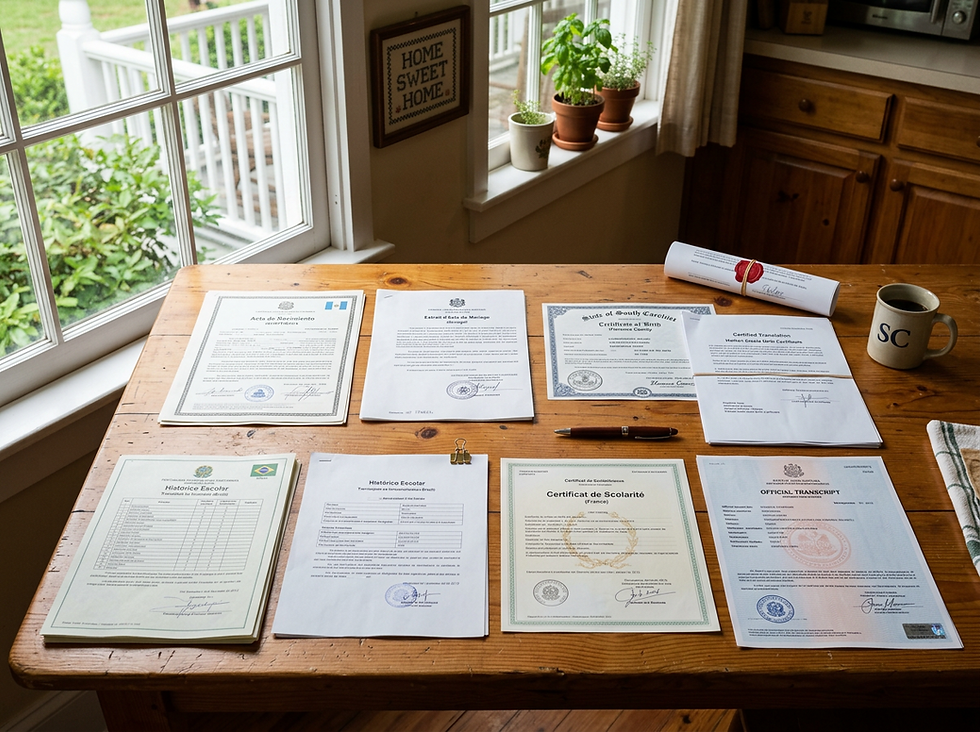
That is why certified document translation services in Tennessee matter. A professional translation is not just about changing words from one language to another. For official use, it also needs to preserve names, dates, seals, formatting, and meaning so the receiving agency can review it with confidence.

Why document translation is in high demand across Tennessee
People request translation help in Tennessee for many reasons. Some need immigration records for U.S. Citizenship and Immigration Services, commonly known as USCIS. Others need school transcripts for university admission, medical records for treatment, or legal documents for court filings.
Translation needs also vary by city and region. Nashville has large health care, legal, education, and immigrant support networks. Memphis is home to major hospitals and international logistics activity. Knoxville, Chattanooga, Murfreesboro, and Clarksville also see translation requests connected to universities, military families, courts, and medical providers.
Common agencies and institutions that may require translated documents include:
USCIS Immigration applications often require full English translations of foreign-language documents.
Tennessee courts Family law, civil matters, probate, and criminal cases may involve translated evidence or personal records.
Tennessee Department of Health Vital records, immunization records, and medical documentation may need translation for administrative use.
Tennessee Department of Human Services Benefits, family services, and eligibility documents may involve records issued in another language.
Local medical centers Hospitals and clinics such as Vanderbilt University Medical Center, Ascension Saint Thomas, Erlanger Health System, Methodist Le Bonheur Healthcare, and other regional providers may need accurate translations for patient history, referrals, or continuity of care.
Schools and universities Admissions offices often review diplomas, transcripts, course descriptions, identity documents, and vaccination records.
This article is informational only and is not legal or medical advice. Requirements can vary by agency, court, school, or hospital, so it is wise to confirm what format they will accept before submitting a translation.
The top 5 languages for document translation assistance in Tennessee
The most requested languages often reflect population trends, immigration patterns, education, and health care access. In Tennessee, these five languages are especially common for official document translation.
1. Spanish
Spanish is usually the leading language for document translation in Tennessee. This matches the national pattern shown by U.S. Census Bureau data, where Spanish is the most widely spoken language after English.
Spanish translation requests often include:
Birth certificates and marriage certificates
Immigration records for USCIS
Medical records and vaccination forms
School transcripts and diplomas
Powers of attorney and affidavits
Divorce decrees and custody documents
Spanish translations must be precise with names and dates. A small error in a surname, accent mark, or date format can create confusion. For example, many Spanish-speaking countries use day-month-year formatting, while U.S. agencies commonly use month-day-year. A trained translator handles those differences clearly without changing the source meaning.
Spanish is also common in health care settings. A patient may need records translated from a clinic abroad before seeing a specialist in Nashville, Memphis, Knoxville, or Chattanooga. In legal settings, Spanish documents may support family cases, immigration petitions, or identity verification.
2. Arabic
Arabic is another major language for translation assistance in Tennessee, driven in part by family immigration, refugee resettlement, education, and international medical needs. Arabic-speaking communities include people with roots in countries such as Egypt, Iraq, Syria, Sudan, Jordan, Lebanon, Yemen, and Saudi Arabia.
Arabic presents special translation challenges because it uses a different writing system and often requires careful handling of names. A single Arabic name may be transliterated into English in more than one accepted way. For official documents, consistency matters.
Arabic document translation commonly includes:
Civil registry documents
Passports and national ID records
Academic transcripts
Medical reports
Marriage, divorce, and custody records
Immigration support documents
For USCIS, the translation must be complete and accurate. That means every visible word, stamp, seal, and handwritten note should be addressed. A certified translation helps show that the work was completed by someone competent to translate from Arabic into English.

3. Chinese
Chinese document translation is often needed for education, business, immigration, and family records. Tennessee’s universities, research programs, health systems, and international business ties all contribute to translation demand.
Chinese translation may involve Simplified Chinese or Traditional Chinese, depending on where the document was issued. Mainland China generally uses Simplified Chinese, while Taiwan and some other communities use Traditional Chinese. A translator must identify the writing system and preserve official details accurately.
Common Chinese translation requests include:
University transcripts
Diplomas and degree certificates
Bank letters and financial records
Birth certificates and household registration documents
Medical records
Business registration documents
Academic documents need special care because grading systems, course names, and degree titles may not match U.S. terminology exactly. A translator should translate the document faithfully rather than “convert” grades unless the receiving institution requests a separate evaluation. Many U.S. schools distinguish between a translation and a credential evaluation. They are related, but they are not the same service.
4. Vietnamese
Vietnamese translation remains important throughout the United States, including in Tennessee. Requests often involve family immigration, personal records, medical records, and educational files.
Vietnamese uses the Latin alphabet with many diacritical marks. Those marks can change meaning, so accuracy is not optional. Names, birthplaces, and official agency names should be handled with attention to the source document.
Vietnamese translation assistance may be needed for:
Birth, death, and marriage certificates
Immigration and naturalization records
Medical history and lab reports
Adoption records
School transcripts
Property and inheritance documents
Medical translations are especially sensitive. A translated hospital discharge summary, medication list, or diagnostic report can affect how a provider understands a patient’s history. The translation should be clear, complete, and faithful to the original document. It should not add interpretation beyond what the document says.
5. French
French is frequently needed for documents from France, Canada, Haiti, West Africa, Central Africa, and other Francophone regions. In Tennessee, French translation requests often appear in immigration, academic, legal, and personal matters.
French documents can vary widely by country. A birth certificate from France may look very different from a civil document issued in Haiti, the Democratic Republic of the Congo, Senegal, Cameroon, or Canada. A professional translator should understand the document’s structure and translate official terms in a way that makes sense to U.S. agencies.
French document translation often includes:
Civil status records
Driver’s license records
Academic transcripts
Employment letters
Medical records
Legal declarations and affidavits
For French-speaking countries where civil records include handwritten notes or marginal annotations, completeness is key. A translator should address side notes, stamps, seals, dates, and official signatures when visible.
Main Cities in Tennessee for Document Translation Services
Nashville: As the state capital and a vibrant cultural hub, Nashville is not only known for its rich music history but also for its diverse population. The influx of international residents and businesses has created a robust demand for document translation services, particularly in legal, medical, and business sectors.
Memphis: Famous for its deep-rooted musical heritage, Memphis is home to a significant number of immigrants and expatriates. This diversity necessitates professional translation services, especially for healthcare documents and educational materials, to ensure effective communication across various communities.
Knoxville: With a strong presence of educational institutions like the University of Tennessee, Knoxville sees a high demand for translation services related to academic documents, research papers, and student transcripts. The city's growing international student population further fuels this need.
Chattanooga: Known for its scenic beauty and outdoor activities, Chattanooga is also becoming a hub for technology and innovation. As businesses expand and attract global talent, the requirement for translation services in business contracts and technical documents continues to rise.
Clarksville: Home to a large military community, Clarksville has a unique need for translation services that cater to military personnel and their families. This includes translating documents related to relocation, legal matters, and healthcare services.
Murfreesboro: As one of the fastest-growing cities in Tennessee, Murfreesboro has a diverse demographic that includes many non-English speakers. Document translation services in this area are essential for local businesses and government agencies to communicate effectively with residents.
Jackson: Jackson serves as a regional hub for commerce and industry, which attracts businesses that require translation services for marketing materials, product documentation, and regulatory compliance to reach a broader audience.
Johnson City: With a strong healthcare presence and several educational institutions, Johnson City has a demand for translation services in the medical field, particularly for patient records and consent forms, as well as in academia for research and coursework.
Franklin: Known for its historic charm and growing economy, Franklin has seen an increase in international businesses. This growth has led to a rising need for translation services in various sectors, including real estate and legal affairs, to facilitate smooth transactions and communications.
Collierville: As a suburb of Memphis with a family-friendly reputation, Collierville has a diverse population that benefits from translation services in community outreach programs, educational materials, and local government communications to ensure inclusivity.
These cities reflect the dynamic and multicultural landscape of Tennessee, where document translation services play a crucial role in bridging communication gaps and supporting the needs of diverse populations.
The documents most often translated for official use
Translation needs usually fall into a few main categories. Each category has its own risks, especially when the document supports an application, medical decision, legal case, or identity record.
Legal documents
Legal translations must be exact and complete. Courts, attorneys, government agencies, and administrative offices may review them closely.
Common legal documents include:
Contracts and agreements
Court orders
Divorce decrees
Custody documents
Affidavits
Powers of attorney
Police certificates
Probate and inheritance records
Legal terminology can be difficult because legal systems do not always match from one country to another. A translator should avoid rewriting the document to “sound more American.” The goal is to reflect the original meaning as accurately as possible.
Some legal documents also need notarization. A notarized translation does not mean a notary confirms the translation is correct. In most cases, the notary verifies the identity of the person signing the certification statement. That distinction matters when an agency asks for a certified and notarized translation.
Medical documents
Medical translations require clarity and care. A patient may need records translated before seeing a specialist, applying for insurance, transferring care, or submitting disability-related documentation.
Common medical documents include:
Discharge summaries
Lab results
Vaccination records
Prescriptions
Surgical reports
Imaging reports
Medical histories
Referral letters
Medical centers in Tennessee, including large hospital systems and local clinics, may need translated records to support patient care. The translation should preserve measurements, dosages, dates, diagnoses, and provider notes. A mistranslated medication dose or allergy note can create real risk.
Personal and civil documents
Personal documents are often the foundation for immigration, school, employment, and family applications. They may look simple, but they must be translated carefully.
Common personal documents include:
Birth certificates
Marriage certificates
Death certificates
Adoption records
Driver’s licenses
Passports
Name change documents
School records
For USCIS, foreign-language documents submitted with an application generally need a complete English translation and a translator certification. The certification states that the translator is competent to translate and that the translation is complete and accurate. That certification is a major difference between a casual translation and a formal certified translation.

Why certified and notarized translation services matter
A certified translation includes a signed statement confirming that the translation is complete and accurate to the best of the translator’s ability. Many agencies request this format because they need a clear chain of responsibility.
Certified translation is commonly requested for:
USCIS immigration applications
Court filings
Academic admissions
Professional licensing
Vital records
Insurance and medical documentation
A notarized translation adds a notary acknowledgment to the certification signature. Some schools, courts, foreign consulates, or private institutions may request notarization. Requirements are not the same everywhere, so the safest approach is to check the exact instructions from the receiving agency.
A strong certified translation should include:
The full translated text
A certification statement
The translator’s name or company name
The translator’s signature
The date of certification
Contact information for verification, when appropriate
Notarization, if requested
Formatting also matters. A translation does not need to look like a perfect graphic copy of the original, but it should be easy to compare against the source. Stamps, seals, logos, signatures, and handwritten notes should be marked or translated when visible. If something is illegible, the translation should say so clearly.
How to prepare documents for translation in Tennessee
Good preparation helps prevent delays. Before sending a document for translation, make sure the copy is readable. Blurry scans, cut-off edges, shadows, and missing pages can lead to questions later.
Use these practical steps:
Send a clear scan or photo
Make sure all four corners of the document are visible. Avoid glare and shadows.
Include every page
Blank backs, instruction pages, stamps, and attachments may matter for official review.
Tell the translator where the document will be submitted
USCIS, a Tennessee court, a university, and a hospital may each have different expectations.
Ask whether certification or notarization is needed
If the receiving agency asks for notarization, request it before the translation is finalized.
Keep names consistent
If a passport spells a name one way, tell the translator. This helps prevent mismatches across documents.
Do not edit the original
Send the document as issued. Agencies may reject altered records.
Translation is also different from interpretation. Translation deals with written documents. Interpretation deals with spoken language, such as a medical appointment, court hearing, or phone call. Many people need both services at different points, but official document submission usually requires translation.

Contact Silver Bay Translations for Tennessee document translation services
When a document affects immigration, health care, school admission, licensing, or a legal matter, accuracy is not optional. Silver Bay Translations can assist with certified and notarized document translation services for Tennessee residents and clients nationwide.
Silver Bay Translations can help with translations for Spanish, Arabic, Chinese, Vietnamese, French, and many other languages. Services may support documents for USCIS, Tennessee agencies, local medical centers, courts, schools, universities, and personal recordkeeping.
For a faster quote, prepare:
A clear copy of the document
The source language and target language
The agency or institution receiving it
Any certification or notarization requirement
Your deadline
Contact Silver Bay Translations for reliable document translation assistance and ask about certified or notarized options before submitting your paperwork.
A concise summary
Tennessee residents often need translated documents for immigration, medical care, legal matters, school admission, licensing, and personal records. The top five languages commonly requested are Spanish, Arabic, Chinese, Vietnamese, and French. Each language brings its own formatting, terminology, and accuracy concerns.
Certified translations help agencies verify that a document was translated completely and accurately. Notarized translations may be needed when a court, school, consulate, or other organization requests an added identity verification step. For official use, professional translation can save time, reduce rejection risk, and make the review process clearer.
If your document needs to be accepted by USCIS, a Tennessee court, a local medical center, or another official institution, contact Silver Bay Translations for trusted document translation services.